Fragments
Des biais inconscients qui altèrent l'égalité de traitement au travail
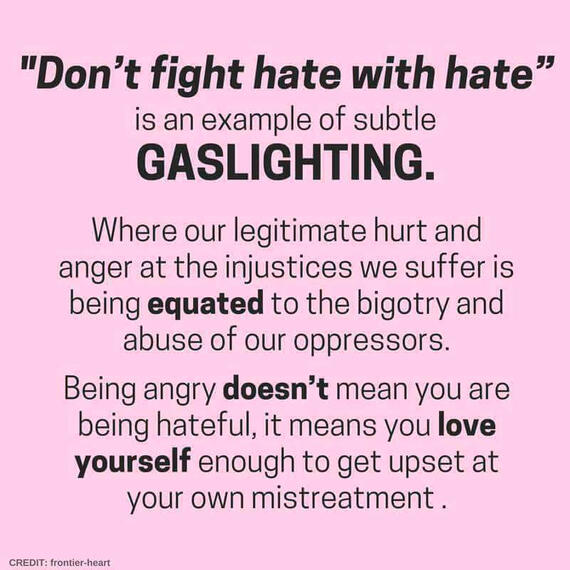
Angry men gain influence, angry women lose influence
" The study found that men use anger to influence others, but women actually lose influence when they allow anger into an argument. (...) “when men expressed their opinion with anger, participants rated them as more credible, which made them less confident in their own opinion. But when women expressed identical arguments and anger, they were perceived as more emotional, which made participants more confident in their own opinion. This effect can’t be explained by women communicating anger less effectively or looking different when they express anger because we took all of that out of the equation, the effect was due to participants thinking that anger came from a man versus a woman.” (...) The influence effect was “evident in both male and female participants,” (...) “Our results have implications for any woman who is trying to exert influence on a decision in their workplace and everyday lives, including governing bodies, task forces and committees, (...) if female political candidates express their opinion with anger, during the debates for example, it is possible that they might have less influence than if they do not express anger” "
The reasons women quit tech and how to adress it
" A study from Harvard, Wharton, and MIT found that men’s voices are perceived as more persuasive, fact-based, and logical than women’s voices, even when they are saying the exact same sentences. Many women have had the experience of their idea being ignored, only for a man to suggest the same idea later and receive praise and credit for it. Women in tech are less likely to get their ideas green-lighted for development than men (30% vs 37%) and a study of 1,800 professionals found that without diverse leadership, women are 20% less likely than straight white men to win endorsement for their ideas, people of color are 24% less likely, and LGBT people are 21% less likely. A recent article shared a strategy used by women in meetings at the White House: “When a woman made a key point, other women would repeat it, giving credit to its author. This forced the men in the room to recognize the contribution — and denied them the chance to claim the idea as their own.” If the large number of women who posted, shared, liked, and tweeted the article is any indication, this is a problem and a solution that resonates with many. "
Performance review gender bias
" High-achieving men and women are described differently in performance reviews. (...) The manager’s gender isn’t a factor. (...) Words like bossy, abrasive, strident, and aggressive are used to describe women’s behaviors when they lead; words like emotional and irrational describe their behaviors when they object. All of these words show up at least twice in the women’s review text I reviewed, some much more often. Abrasive alone is used 17 times to describe 13 different women. Among these words, only aggressive shows up in men’s reviews at all. It shows up three times, twice with an exhortation to be more of it. "
Why are women leaving the tech industry in droves?
" A Harvard Business Review study from 2008 found that as many as 50% of women working in science, engineering and technology will, over time, leave because of hostile work environments. The reasons are varied. According to the Harvard study, they include a "hostile" male culture, a sense of isolation and lack of a clear career path. An updated study in 2014 found the reasons hadn't significantly changed. (...) Google's own data showed women were promoted less often than men because workers need to nominate themselves. Women who did so got pushback. Based on her studies, Williams found that women are rewarded for modesty and penalized for what men might see as "aggressive" behavior. "
Des conséquences négatives pour les femmes au travail dans divers secteurs
Gender bias in the film industry
" Women made up a majority only in costume and wardrobe departments and casting, all of which, traditionally, have been perceived as feminine workplaces. Visual effects, usually the largest department for big feature films, had an average of only 17.5% of women, while music had just 16%, and camera and electricals were, on average, 95% male. Even in creative areas men were found to dominate. The 2,000 films surveyed revealed that women accounted for only 13% of the editors, 10% of the writers and just 5% of the directors. (...) rather than improving over time, the number of women working with blockbuster film crews in 2013 actually declined from previous years "
Why women don’t ‘just report’ sexual harassment
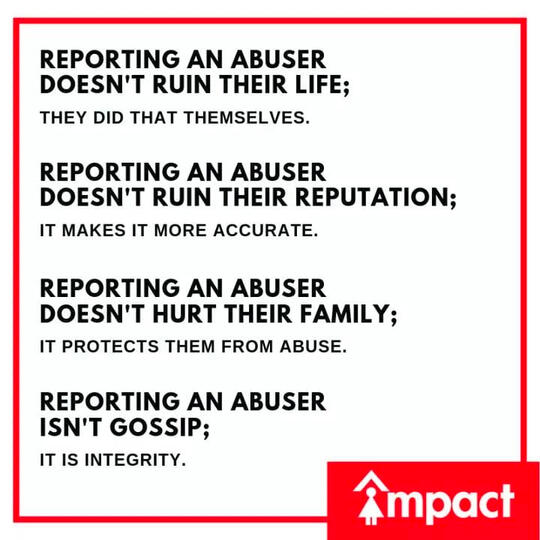
" (...) It’s not like he’s sliding a hand into your bra or asking if you’re on your period or calling you a slut. You can deal with it. You’d feel silly if you went to someone about it, and really, he’s not like, groping you. It’s only two minutes out of your day. And he’s good at his job—would he get fired if you went to someone? Would people know? Would you become the office bitch? It’s not worth it. You can deal. You wince imperceptibly when you see him across a crowded room and you go out of your way to avoid his usual haunts, but really, you assure yourself, you can handle it. (...) [+ others exemples] This is the reality of being a woman in the comic book industry. (...) I’m afraid of the power these men wield and those who might rush to their aid. I’m afraid of how it might affect my family and friends. I’m afraid of how it might affect my career. (...) And somewhere, a man is asking: Why don’t women speak up "
Women Speak Out About Gender Inequality in Animation
" Women don't receive the same opportunities as men do in animation, and they're finally speaking out about it. (...) The no-holds-barred 4,800-word piece written by Ariane Lange sheds unprecedented light on the challenges faced by women who work in the animation industry, from outright sexual harassment to more subtle forms of discrimination that prevent women from receiving the same kind of advancement opportunities afforded to male counterparts. The strength of Lange’s piece comes from its thoroughness; she spoke to a good sample of industry artists, representing a diverse array of professionals from the last five decades, working throughout TV and feature animation. "
Why stunt women are more in danger than stunt men
" They perform mind-blowing stunts dressed in clothes as flimsy as paper doilies and are forced to meet Hollywood’s demands for ever-shrinking waistlines without losing the muscles they depend on for work. Meet cinema’s small but dedicated community of stuntwomen: because of the skimpy clothes they have to wear, they put themselves in more danger than their male colleagues. (...) Throughout her 22-year career she never questioned the fact that men have the benefit of being fully padded while she’s flung off galloping horses in a tight leather skirt. “It’s just what needs to be done for film. It’s not life-threatening; it just hurts a lot more,” she says. Grant once did have a serious accident, caused largely by her footwear. “They were very slippery, feminine shoes. I slipped on a hill and I got impaled by a dagger, through my head. I ended up going into cardiac arrest and I was a bit of a mess.” (...) "
Coding Like a Girl
" One category of reactions that I receive all the time as a programmer that presents as feminine is: No one believes I am a programmer. I can’t tell you how many people, when meeting me and hearing my profession, tell me that I look like a designer, someone in accounting, someone in marketing, anything but a programmer. (...) [A guy] constantly asked me throughout the workshop how I was enjoying learning to program. Apparently, presenting as feminine makes you look like a beginner. It is very frustrating that I will either look like not a programmer or look like a permanent beginner because I have programmed since age eight. "
The Forgotten Female Programmers Who Created Modern Tech
" If your image of a computer programmer is a young man, there's a good reason: It's true. (...) It wasn't always this way. Decades ago, it was women who pioneered computer programming — but too often, that's a part of history that even the smartest people don't know. (...) Lovelace, the mathematician, died when she was 36. The women who worked on the ENIAC [one of the world's first fully electronic general-purpose computers] have all passed away, as has Grace Hopper [she found a way to program computers using words rather than numbers — most notably a program language called COBOL]. But every time you write on a computer, play a music file or add up a number with your phone's calculator, you are using tools that might not exist without the work of these women. "
Biais de recrutement et proportions inégalitaires
Plus de femmes recrutées grace au CV anonymisé
" On two different occasions, Speak With a Geek presented the same 5,000 candidates to the same group of employers. The first time around, details like names, experience and background were provided. 5% selected for interviews were women. You can guess what happened next, right? When identifying details were suppressed, that figure jumped to 54%. (...) Removing traces of gender or race may prevent employers from basing interview decisions on a conscious or unconscious bias, Speak With a Geek said. The former would be an outright belief that women, for instance, aren’t as good at coding as men are. The latter would be more subtle and might mean a company picks the man because he better fits that employer’s unexamined idea of who a coder is. "
Women See Gender Bias in Your Job Postings
" Are a few gender-themed words in your job descriptions signaling women, unconsciously, to not apply? (...) the results showed that women found that jobs with masculinity worded job descriptions less appealing, compared with the same types of jobs which used feminine wording (...) highly masculine wording used in the job posting reduces women’s appeal of the job because it signals that women do not fit or belong in that job. In this way, qualified male and female applicants are opting out of jobs that they could perform well. (...) The nuance of gender-themed words makes it a particularly pernicious and powerful contributor to inequality because it was found, surprisingly, that not one participant realized the presence of the gendered language. "
Do You Realize How Few Women CEOs Exist?
" Executives vastly overestimated the number of women who are chief executive officers in a recent survey of 1,700 C-suite leaders around the world. (...) On average, respondents guessed that 23 percent of large companies around the world have female leaders. Women executives were even more misinformed — guessing that 25 percent had female CEOs, on average. (...)Everyone was so far off the mark (...) There are only 23 female CEOs of Standard & Poor’s 500 companies — not even 5 percent (...) Likewise, just 23 Fortune 500 companies are led by women. That’s a drop from last year, when 24 had female leaders. Just 8 percent of companies worldwide with revenues of at least $500 million have a female CEO (...) "
Embauche-t-on les femmes quand ça va mal ?
" Ils observent qu’en comparaison avec les entreprises ayant nommé des hommes, les entreprises nommant des femmes à des postes de direction sont plus susceptibles d’avoir subi de mauvaises performances sur les marchés boursiers au cours des cinq mois précédant la ou les nominations. On peut en déduire que du côté des dirigeantes, l’accession au pouvoir se double le plus souvent d’un défi professionnel plus relevé et d’un risque d’échec accru. (...) le choix d’une dirigeante tend à aller dans le sens d’une rupture avec le modèle dominant s’il est avéré que le modèle ne fait plus ses preuves. Sauf qu’une fois arrivée au pouvoir, une femme sera plus durement jugée qu’un homme. Le cabinet d’audit et de conseil en stratégie américain PwC, qui a examiné la trajectoire des dirigeantes de grandes entreprises entre 2003 et 2013, avance le chiffre de 38 % d’évictions pour les femmes, contre seulement 27 % pour les hommes. "
women do ask for raises as often as men
" It’s a well-worn trope that women are paid less than men because they aren’t as aggressive in asking for raises. They are more concerned with fitting in, goes the argument, and they don’t want to be perceived as overly demanding. In short, it’s women that are the problem, not their bosses. But a new study offers a different scenario. (...) men and women asked for raises with the same frequency. But there was a huge difference in outcomes. Men were 25% more likely to get a pay rise, the study found. In other words, it is not that women don’t ask for more money, only that they don’t get it. (...) one hopeful sign: The researchers found that women and men under 40 both asked for and received pay rises at the same rate. "
Un ensemble de biais inconscients qui font des dégats
Both men and women are mostly interrupting women
" I noted 314 interruption events spread over 900 minutes of conversation, which means that collectively people interrupted each other once every two minutes and fifty-one seconds (...) all the conversations I observed were formal work meetings (...) men accounted for 212 of the 314 total interruptions, about 2/3 of the total. (...) 149 of them were interruptions where women had been previously speaking. Men do interrupt other men, but far less often. (...) Women interrupt each other constantly, and almost never interrupt men. Of the 102 interruptions from women that I logged, a staggering 89 of them were instances of women interrupting other women. (...) I observed a total of 13 examples of women interrupting male speakers. (...) men interrupt more than women. And when they interrupt, both men and women are mostly interrupting women. "
Le temps de parole et le choix des sujets de conversation
" Selon un mythe bien ancré, les femmes parleraient plus que les hommes. Or les études universitaires ont montré que c’est plutôt le contraire (...) Ces différences, certes petites mais significatives dans le style de conversation, font qu'en groupes mixtes les hommes sont largement avantagés et dominent clairement la conversation. (...)Dans une conversation, celui qui parle le plus et qui est surtout en capacité de choisir les sujets de conversation, est celui qui a le statut social le plus élevé. Parler et mener la conversation permet également de donner sa vision du monde et d’influencer autrui. (...) interruption, silences, réponses retardées ou encore de multiples autres stratégies signalent du désintérêt par rapport à ce que les femmes disent : ridiculiser ou minimiser leur sujet de conversation, sortir de la pièce (...), changer de sujets de conversation, regarder ailleurs etc.Dans les contextes moins formels et intimes, la contribution des femmes serait plus importante (...) cette méta-analyse a également montré que les mères ont tendance à être plus loquaces avec leurs filles et qu’elles employaient plus souvent un discours de soutien avec ces dernières. Tout semble indiquer les parents offrent des modèles genrés selon lesquels les femmes utilisent la parole pour créer des liens, et les hommes pour obtenir quelque chose ou affirmer un statut social. (...) "
Les hommes ET les femmes pensent que les femmes sont moins douées en mathémathiques...
"When the only information that the employers had was a photograph of the candidate, men were twice as likely to be hired for the simple math job, no matter whether it was a man or woman doing the hiring (...) The hiring bias did not disappear when candidates self-reported their ability on the task, in part because women tended to underestimate their ability while men tended to boast. And even when the employers received accurate information about the actual performance of the candidates, the bias did not fully disappear. (...) The stronger the gender stereotype, the less you are likely to change in favor of women even when you hear about [a woman's] strong performance on the test."
...les filles d'un niveau égal sont moins bien notées par les professeurs, ce qui affecte leur future carrière...
"New research has found some teachers mark boys' primary (elementary) school maths tests more favourably than girls, impacting girls' uptake of advanced mathematics and science subjects in high school. Entrance rates into maths and science degrees at university level can also be traced back to the impacts of teachers' gender bias in primary school. (...) The study found that the effects of teacher bias persisted for girls, leading to poorer results through their high school years. However, many boys whose teachers over-assessed their performance in the early years went on to be successful in mathematics and science. How students see themselves as learners is vital to encouraging them to study at higher levels."
...à cause de ce biais, elles finissent par abandonner leurs études scientifiques.
"women actually perform very well compared to their male peers. (...) we suspect that women get the sense that they don’t belong. They don’t see women in their textbooks, they don’t see women in their lectures (...) In a class with a male professor, women who had entered the class with consciously positive attitudes towards math, were already forming negative unconscious feelings towards math after two weeks of the class. Men, on the other hand, regardless of the sex of the professor, all reported liking math, and their implicit self-concept reflected this positive attitude. It’s a cultural expectation that math and science are for men. (...) Women are constantly battling the negative stereotype"
How not to talk to female Nasa astronauts
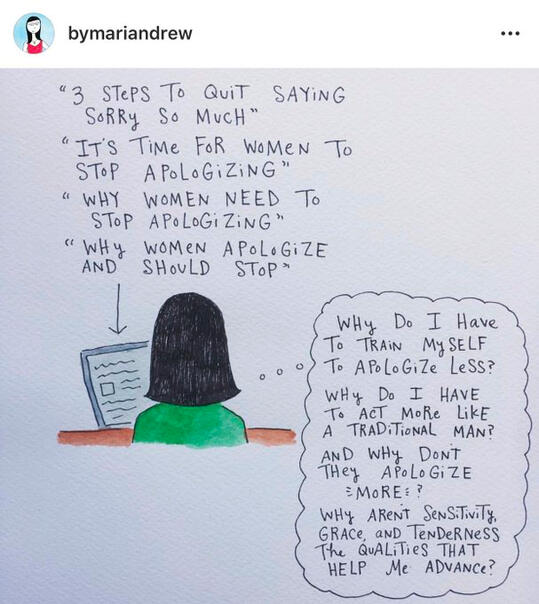
" But there is a serious underlying issue here. These interactions are the visible manifestation of societal assumptions about women’s inferiority in intellectual and professional situations. They represent the same ingrained stereotypes that lead to women being less frequently promoted or hired for certain jobs. The same issues are at play when women find themselves being spoken over in the workplace, when a client directs every question to a junior male colleague or when a woman makes a suggestion in a meeting and is ignored, only for the same idea to be voiced by a male colleague, to loud agreement, moments later. (...)However, as Chemaly points out, the way to fix it isn’t simply to suggest that women need to be more assertive, as we are often told. The problem doesn’t spring from hesitant women wringing their hands and dithering until a heroic man rides in and provides an explanation. The aforementioned astronaut, astrophysicist, Marine Corp veteran and Olympic cyclist hardly fit that description. No, it arises when men are brought up in a world that teaches them that their knowledge and opinions are worth more than those of a far more qualified woman. It happens when some men act on these ingrained assumptions. And its impact, particularly in the workplace, can go far beyond the initial annoyance. The only way to stop it is to change the narrative that sets up male contributions as superior in the first place, not to “train” women to deal with it later on. "
Viking warriors can be females
"Previously, researchers had misidentified skeletons as male simply because they were buried with their swords and shields. (Female remains were identified by their oval brooches, and not much else.) By studying osteological signs of gender within the bones themselves, researchers discovered that approximately half of the remains were actually female warriors, given a proper burial with their weapons." + "Although the results presented here cannot be used to determine the number of female settlers, they do suggest that the ratio of females to males may have been somewhere between a third to roughly equal."
Témoignages de personnes en mesure de comparer
When you’ve lived on both sides of the coin
" Many trans men I spoke with said they had no idea how rough women at work had it until they transitioned. As soon as they came out as men, they found their missteps minimized and their successes amplified. Often, they say, their words carried more weight: They seemed to gain authority and professional respect overnight. They also saw confirmation of the sexist attitudes they had long suspected: They recalled hearing female colleagues belittled by male bosses, or female job applicants called names. (...) Trans women have long observed the flip side of this reality. Joan Roughgarden, a professor emerita of biology at Stanford and a transgender woman, says it became much more difficult to publish her work when she was writing under a female name. “When I would write a paper and submit it to a journal it would be almost automatically accepted,” she said of the time when she had a man’s name. “But after I transitioned, all of a sudden papers were running into more trouble, grant proposals were running into more trouble, the whole thing was getting more difficult.” “As a man, you’re assumed to be competent unless proven otherwise,” she says. “Whereas as a woman you’re presumed to be incompetent unless proven otherwise.” "
I had no idea how good men had it at work
" Every day, I am rewarded for behavior that I did not previously exhibit, such as standing up for my ideals, pushing back, being fluent in complex power dynamics, and strategically—and visibly—taking credit. (...) when I do talk, people don’t just listen: they lean in. They keep their eyes focused on my mouth, or down at their hands, as if to rid themselves of any distraction beyond my powerful words. Pretty remarkable for someone who spent 30 years being tolerated (...) I was regularly interrupted. At meetings, my voice didn’t prompt people to pause and listen. I never hard-balled a salary negotiation, either. And I wasn’t ever hired, as I was two years ago, for my “potential.” All this is despite the fact that I have only worked in progressive environments, places where I have heard men reflect on internalized sexism and where women occupy prominent leadership roles. (...) Therein lies the danger, says Dr. Caroline Simard (...) Her team studies implicit bias, “errors in decision making” that result in the thousands of subtle behaviors perpetuated unquestioningly by almost everyone, of every gender, in the workplace. “Even when we think we can evaluate rationally,” Dr. Simard says, “bias leads us to errors in judgment.” "